
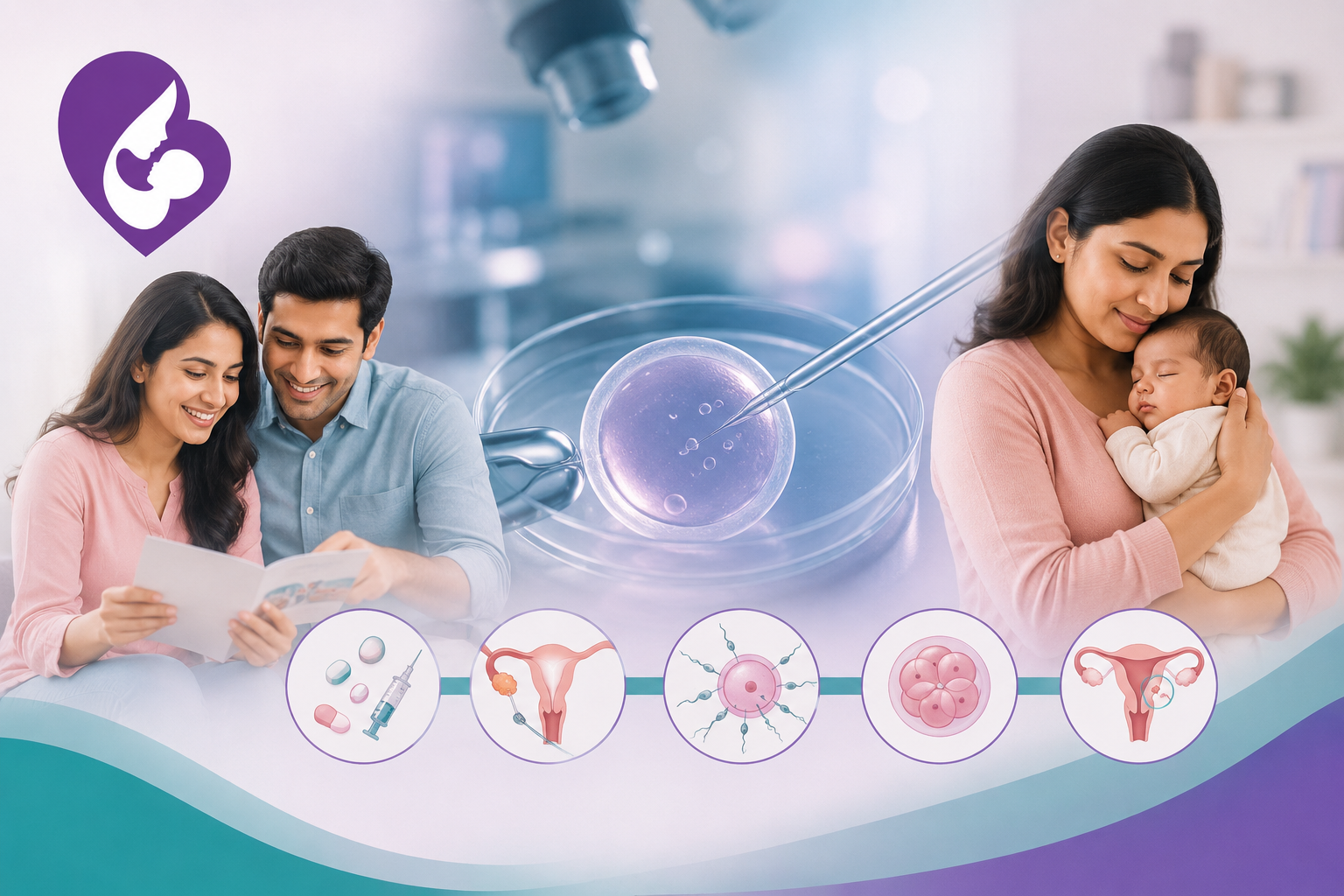
Understanding IVF A Step by Step Guide for Beginners
In Vitro Fertilisation (IVF) is a medical procedure that helps individuals or couples struggling with infertility to conceive a child. In simple terms, it involves combining an egg and sperm outside the body, in a laboratory setting, to create an embryo, which is then transferred into the uterus to hopefully result in pregnancy.
Understanding the IVF process is crucial for beginners because it helps set realistic expectations, reduces anxiety about the unknown, and empowers patients to make informed decisions at each stage-from initial consultations through medication, egg retrieval, fertilisation and embryo transfer.
What Is IVF Treatment?
What Does IVF Stand For?
IVF stands for In Vitro Fertilisation. In vitro simply means in glass, which refers to the fact that fertilisation happens outside the body, in a lab dish, rather than inside a woman’s body as it would naturally.
In simple terms, doctors collect eggs from the woman and sperm from the man (or a donor), and combine them in a laboratory. If fertilisation is successful, the resulting embryo is placed into the woman’s uterus, where it can implant and grow into a pregnancy.
Why Is IVF Done?
IVF is one of the most well-known and effective fertility treatments available today. It’s usually considered when other, simpler treatments haven’t worked, or when a couple’s specific fertility issue means natural conception is unlikely. It gives many people who couldn’t otherwise conceive a real chance at having a biological child.
When Might a Doctor Recommend IVF?
Female Fertility Factors
A doctor may suggest IVF if a woman has:
- Blocked or damaged fallopian tubes – this prevents the egg and sperm from meeting naturally
- Ovulation problems – irregular or absent ovulation makes it hard to conceive
- Reduced ovarian reserve – fewer eggs remaining than expected for her age
- Endometriosis – a condition where tissue similar to the uterine lining grows outside the uterus, affecting fertility
Male Fertility Factors
IVF may also be recommended when the male partner has:
- Low sperm count
- Poor sperm motility (sperm that don’t swim well)
- Sperm quality issues, such as abnormal shape or structure
Other Reasons for IVF
Sometimes IVF is chosen for other reasons, including:
- Unexplained infertility, where no clear cause is found despite testing
- Previous fertility treatments that didn’t work, such as IUI
- Genetic concerns, where embryos may be tested before transfer, or fertility preservation, such as freezing eggs before medical treatment like chemotherapy
What Are the Steps Involved in IVF Treatment?
Step 1 – Initial Fertility Evaluation
The process starts with a full check up. This usually includes a review of medical history, blood tests, an ultrasound to check the ovaries and uterus, an assessment of ovarian reserve (how many eggs remain) and a semen analysis for the male partner.
Step 2 – Ovarian Stimulation
The woman takes fertility medications, usually as injections, for about 8-14 days. These encourage the ovaries to develop multiple follicles (each containing an egg) instead of just one, as happens naturally. Regular ultrasounds and blood tests track how the follicles are growing.
Step 3 – Trigger Injection
Once the follicles are ready, a trigger shot is given. This injection finishes maturing the eggs so they’re ready to be collected. Timing is very important here, the egg retrieval is scheduled precisely, usually 36 hours after the trigger shot.
Step 4 – Egg Retrieval
Eggs are collected in a short procedure guided by ultrasound, usually done under light sedation, so it isn’t painful. A thin needle is used to gently draw the eggs out of the follicles. Most women can go home the same day and rest for the remainder of it.
Step 5 – Sperm Collection and Fertilisation
A sperm sample is collected and prepared on the same day. Fertilisation then happens in one of two ways: conventional IVF, where eggs and sperm are placed together and left to fertilise naturally, or ICSI, where a single sperm is injected directly into an egg often used when sperm quality is a concern.
Step 6 – Embryo Development
Fertilised eggs are kept in the lab and monitored closely as they grow into embryos over the next few days. Many clinics wait until embryos reach the blastocyst stage (around day 5) before transfer, as this stage tends to have better implantation chances. Extra healthy embryos can be frozen for future use.
Step 7 – Embryo Transfer
A chosen embryo is placed into the uterus using a thin, flexible tube, a quick, generally painless procedure that doesn’t need sedation. This can be a fresh transfer, done soon after retrieval, or a frozen transfer, done in a later cycle.
Step 8 – Pregnancy Test and Follow Up
After the transfer, there’s a waiting period of about 10-14 days before a blood test can confirm pregnancy. Follow up appointments help track hormone levels and, if the test is positive, an early ultrasound is usually scheduled to check on the pregnancy’s progress.
How Long Does an IVF Cycle Take?
Understanding the IVF Timeline
A full IVF cycle usually takes around four to six weeks from start to finish, though this can vary from person to person. It generally follows this pattern: an initial consultation to plan treatment, two to three weeks of ovarian stimulation, egg retrieval, a few days of fertilisation and embryo development in the lab, embryo transfer, and finally a pregnancy test around two weeks later. While this gives a general idea of what to expect, every patient’s journey looks a little different.
Why Can IVF Treatment Take Different Amounts of Time?
No two IVF journeys are exactly alike, and timelines can shift depending on individual circumstances. Some patients need a personalised treatment plan that adjusts medication doses or monitoring based on how their body responds. Others may require additional testing or procedures along the way, which can add extra time. There’s also a decision to be made between a fresh embryo transfer (done in the same cycle as retrieval) or a frozen embryo transfer (done in a later cycle), and choosing frozen transfer will naturally extend the overall timeline.
What Factors Can Affect IVF Success?
Age and Ovarian Reserve
Age is one of the biggest factors influencing IVF outcomes. As women get older, both the number and quality of their eggs tend to decline, which can affect the chances of a successful pregnancy. This is why fertility specialists often look closely at ovarian reserve when planning treatment.
Egg, Sperm and Embryo Quality
The quality of the eggs and sperm used plays a major role in how well fertilisation and embryo development go. Even when fertilisation is successful, not every embryo will develop as strongly as others, which is why embryos are monitored carefully in the lab before a transfer is planned.
Underlying Fertility Conditions
The original cause of infertility can also shape the likelihood of success. Some conditions respond better to IVF than others. A history of previous fertility treatments, along with a person’s overall reproductive health, also gives doctors useful information when predicting how a cycle might go.
Is IVF Suitable for Everyone?
IVF isn’t always the first treatment recommended, since simpler and less invasive options may work well for some people. Because every person’s fertility situation is different, a personalised fertility assessment is essential before deciding on the right path forward. Speaking openly with a fertility specialist helps patients understand all their options and choose the treatment that best suits their needs.
How Can a Fertility Clinic Support Your IVF Journey?
Personalised Fertility Assessment
A good fertility clinic starts by understanding each patient’s individual needs and medical history, then uses that information to build a treatment plan tailored specifically to them.
Monitoring and Medical Support
Throughout the IVF cycle, patients benefit from regular monitoring and clear guidance at every stage, helping them feel supported and informed rather than left to navigate things alone.
Choosing the Right Fertility Clinic
When choosing a clinic, it helps to look for experienced fertility specialists, well-equipped facilities with strong laboratory support, and a genuinely patient-focused approach to care.
Conclusion
IVF may seem complex at first, but breaking it down into simple steps from evaluation and stimulation to retrieval, fertilisation and embryo transfer makes the process much easier to understand. Every fertility journey is unique, which is why professional guidance matters so much along the way.
You don’t have to navigate this journey alone. Book a consultation with Prachi Clinic and Fertility Centre today and take the first confident step towards building your family. Our experienced fertility specialists are ready to guide you with personalised care, expert support and honest answers to all your questions every step of the way.
Frequently Asked Questions
What Is IVF in Simple Terms?
IVF stands for In Vitro Fertilisation. It’s a fertility treatment where an egg and sperm are combined outside the body, in a lab, to create an embryo. This embryo is then placed into the uterus, giving people who struggle to conceive naturally a chance at pregnancy.
How Many Steps Are There in IVF?
IVF generally involves eight main steps: initial fertility evaluation, ovarian stimulation, the trigger injection, egg retrieval, sperm collection and fertilisation, embryo development, embryo transfer, and finally, a pregnancy test with follow-up care.
How Long Does One IVF Cycle Take?
A single IVF cycle usually takes around four to six weeks from the initial consultation to the pregnancy test. However, the exact timeline can vary depending on your individual treatment plan and whether a fresh or frozen embryo transfer is used.
Is IVF Painful?
Most people find IVF to be quite manageable. Egg retrieval is done under light sedation, so it isn’t painful, and embryo transfer is typically a quick, painless procedure. Some mild discomfort or bloating from the fertility medications is common, but severe pain is not.
What Factors Determine IVF Success?
Several factors influence IVF success, including the woman’s age and ovarian reserve, the quality of the eggs, sperm and resulting embryos and any underlying fertility conditions. A personalised assessment from a fertility specialist gives the clearest picture of individual chances of success.